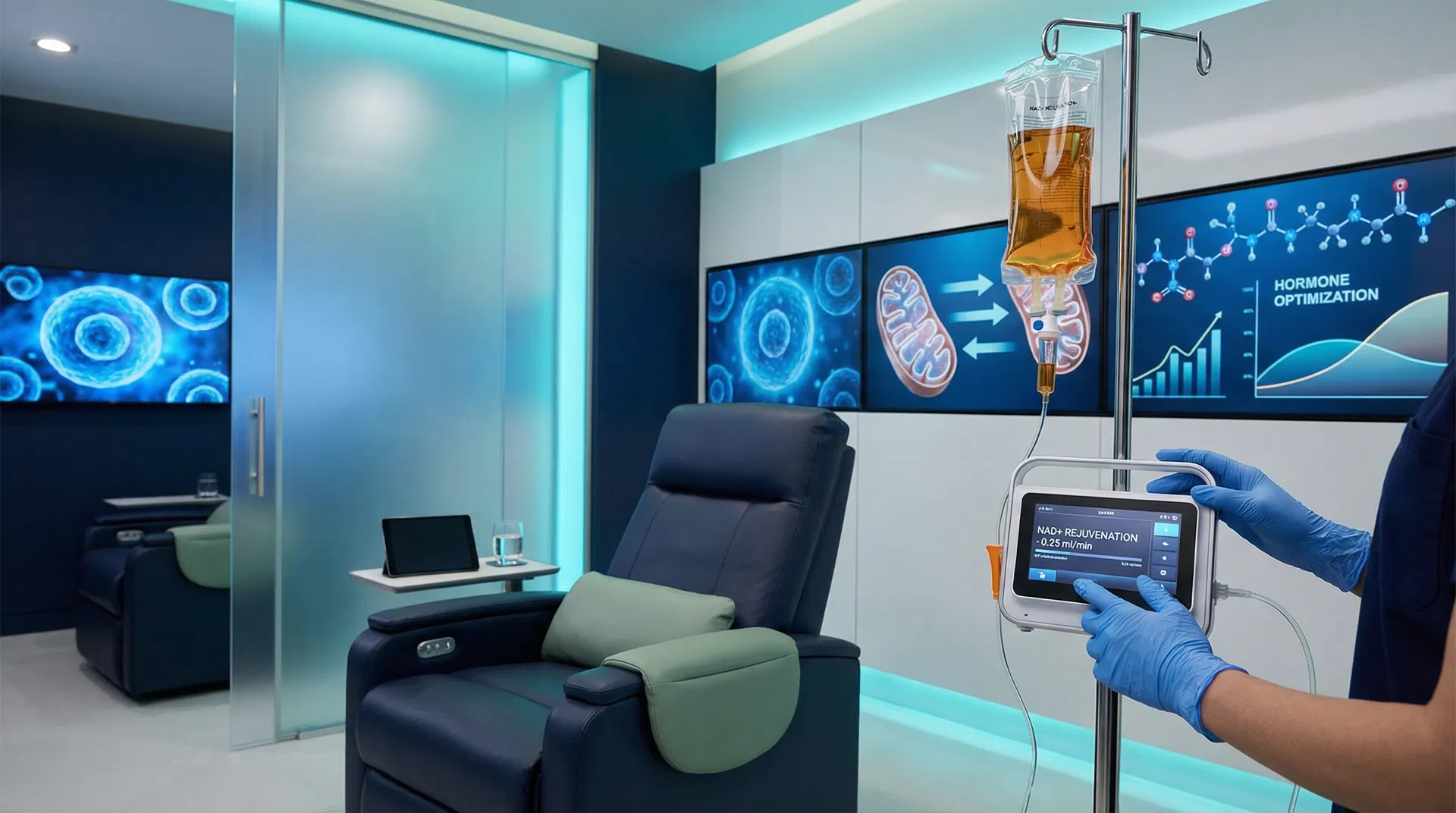
Biohacking & Recovery Tools at Longevity Centre London
Advanced recovery and cellular optimisation technologies — cryotherapy, hyperbaric oxygen therapy, red light therapy, and infrared saunas — delivered under physician supervision at our Fitzrovia clinic. Each modality is selected and sequenced according to your biomarker profile and recovery goals.
What Are Biohacking & Recovery Tools?
Biohacking refers to the deliberate use of biological, environmental, and technological interventions to improve how the body functions at a cellular level. Recovery tools, in the clinical sense, are modalities that accelerate the body's repair processes — reducing systemic inflammation, improving mitochondrial efficiency, and restoring physiological homeostasis after physical or metabolic stress.
At Longevity Centre London, these are not wellness add-ons. Each modality is integrated into a broader longevity programme and sequenced according to your individual biomarker data. A patient recovering from overtraining syndrome has different recovery needs than one managing chronic low-grade inflammation or post-viral fatigue. The protocols reflect that distinction.
The four core modalities we offer — whole-body cryotherapy, hyperbaric oxygen therapy (HBOT), photobiomodulation (red light therapy), and infrared sauna — each act on distinct physiological pathways. Used in combination, and guided by regular biomarker monitoring, they produce measurable improvements in recovery speed, inflammatory markers, sleep quality, and cellular energy output.
The Four Core Modalities
Each modality targets a specific physiological mechanism. Understanding how they work individually — and how they interact — is the basis for building an effective recovery protocol.
Whole-Body Cryotherapy (WBC) at −85°C
Duration: 2–3 minutes per session | Frequency: 3–5 sessions per week (acute phase)
Mechanism of Action
Whole-body cryotherapy exposes the entire body to temperatures between −85°C and −110°C for two to three minutes. The extreme cold triggers a cascade of physiological responses mediated primarily by the sympathetic nervous system. Peripheral vasoconstriction occurs within seconds, redirecting blood flow to the body's core organs. On exiting the chamber, vasodilation produces a rapid influx of oxygenated blood to peripheral tissues — a mechanism that accelerates the clearance of metabolic waste products including lactate and reactive oxygen species.
The anti-inflammatory effect of WBC operates through suppression of pro-inflammatory cytokines — specifically interleukin-6 (IL-6) and tumour necrosis factor-alpha (TNF-α) — alongside upregulation of anti-inflammatory interleukin-10 (IL-10). A 2019 study published in Frontiers in Physiology demonstrated that a single WBC session reduced circulating IL-6 by 34% in trained athletes, with effects persisting for up to 24 hours post-exposure.
Beyond inflammation, WBC activates the hypothalamic-pituitary-adrenal (HPA) axis, producing a transient cortisol spike followed by a sustained reduction in baseline cortisol levels over a treatment course. This neuroendocrine response contributes to the mood-enhancing and sleep-improving effects reported by patients — effects that are measurable via HRV monitoring and salivary cortisol testing.
Clinical Applications at Longevity Centre London
Clinical Note
WBC is contraindicated in patients with uncontrolled hypertension, Raynaud's disease, cold urticaria, or severe cardiovascular disease. All patients undergo a medical screening assessment before their first session. Our physicians review your cardiovascular biomarkers and blood pressure history prior to prescribing a cryotherapy protocol.
Hyperbaric Oxygen Therapy (HBOT)
Duration: 60–90 minutes per session | Pressure: 1.5–2.0 ATA | Frequency: Protocol-dependent
Mechanism of Action
Hyperbaric oxygen therapy involves breathing 100% pure oxygen inside a pressurised chamber at 1.5 to 2.0 atmospheres absolute (ATA). Under these conditions, oxygen dissolves directly into the plasma — not just into haemoglobin — increasing total oxygen delivery to tissues by up to 1,200% compared to breathing room air at sea level. This hyperoxic environment drives oxygen into areas of the body where circulation is compromised or where mitochondrial function is impaired.
The cellular effects of HBOT are well-documented. Repeated sessions activate hypoxia-inducible factor 1-alpha (HIF-1α), a transcription factor that stimulates angiogenesis — the formation of new blood vessels — in hypoxic tissues. Simultaneously, HBOT upregulates superoxide dismutase and catalase, two of the body's primary antioxidant enzymes, reducing oxidative stress at the mitochondrial level.
Particularly relevant to longevity medicine is HBOT's effect on cellular senescence. A landmark 2020 study by Hachmo et al., published in Aging, demonstrated that 60 daily HBOT sessions produced a 37.30% increase in telomere length and a 11–37% reduction in senescent T-helper cells in healthy ageing adults — findings that directly address two of the hallmarks of ageing.
Clinical Applications
Protocol Design
HBOT protocols at Longevity Centre London are prescribed based on your presenting condition, biomarker profile, and treatment goals. A standard longevity protocol typically involves 40 sessions over 8–10 weeks. Patients with specific conditions such as post-viral fatigue or neurological presentations receive customised protocols reviewed by our medical team at regular intervals.
Red Light Therapy (Photobiomodulation)
Wavelengths: 630–680nm (red) and 800–850nm (near-infrared) | Duration: 10–20 minutes per session
Mechanism of Action
Photobiomodulation (PBM), commonly referred to as red light therapy, uses specific wavelengths of red and near-infrared light to stimulate cellular repair processes. The primary chromophore — the cellular component that absorbs this light — is cytochrome c oxidase (CCO), the terminal enzyme in the mitochondrial electron transport chain. When CCO absorbs red and near-infrared photons, it dissociates from nitric oxide, restoring its capacity to drive ATP synthesis.
This mitochondrial stimulation produces a cascade of downstream effects. ATP production increases, providing cells with the energy required for repair and regeneration. Reactive oxygen species (ROS) are transiently upregulated at low levels — sufficient to activate protective antioxidant pathways without causing oxidative damage. Nitric oxide, released during the process, acts as a vasodilator, improving local circulation and oxygen delivery.
Near-infrared wavelengths (800–850nm) penetrate more deeply than red wavelengths, reaching muscle tissue, joint capsules, and even bone. This depth of penetration makes PBM particularly effective for musculoskeletal recovery, joint inflammation, and deep tissue repair. A 2017 meta-analysis in Photomedicine and Laser Surgery reviewing 22 randomised controlled trials found PBM reduced pain scores by an average of 2.1 points on the Visual Analogue Scale and improved functional outcomes in musculoskeletal conditions.
Clinical Applications
Infrared Sauna Therapy
Temperature: 45–65°C | Duration: 20–40 minutes | Frequency: 3–4 sessions per week
Mechanism of Action
Unlike traditional Finnish saunas that heat the surrounding air to 80–100°C, infrared saunas use far-infrared radiation (FIR) to heat the body directly at a lower ambient temperature of 45–65°C. FIR penetrates 4–5 centimetres into soft tissue, inducing a deep core temperature rise that activates heat shock proteins (HSPs) — molecular chaperones that repair misfolded proteins, a process directly relevant to cellular ageing and neurodegenerative disease prevention.
The cardiovascular response to infrared sauna exposure mirrors moderate-intensity aerobic exercise. Heart rate increases to 100–150 beats per minute, cardiac output rises, and peripheral vasodilation occurs — producing improvements in endothelial function and arterial compliance. A 2018 study in JAMA Internal Medicine following 2,315 Finnish men over 20 years found that sauna use four to seven times per week was associated with a 50% reduction in cardiovascular mortality compared to once-weekly use.
Infrared sauna also activates the body's detoxification pathways. Sweat produced during FIR sessions contains higher concentrations of heavy metals, phthalates, and bisphenol A (BPA) compared to sweat from exercise — a finding supported by research published in the Journal of Environmental and Public Health. For patients with elevated heavy metal burden identified through biomarker testing, infrared sauna forms part of a structured detoxification protocol.
Clinical Applications
Modality Comparison
Each modality acts on distinct physiological pathways. This comparison helps clarify which tools are most appropriate for specific health goals.
| Modality | Primary Target | Key Mechanism | Session Duration | Best For |
|---|---|---|---|---|
| Cryotherapy (WBC) | Inflammation & Nervous System | Cytokine suppression, HPA axis modulation | 2–3 minutes | Acute recovery, inflammation, mood |
| HBOT | Mitochondria & Vasculature | Hyperoxia, angiogenesis, senolysis | 60–90 minutes | Telomere length, brain health, wound healing |
| Red Light Therapy | Mitochondria & Tissue | CCO activation, ATP synthesis, NO release | 10–20 minutes | Cellular energy, skin, joint pain |
| Infrared Sauna | Cardiovascular & Detox | Heat shock proteins, FIR penetration, sweating | 20–40 minutes | Cardiovascular health, detox, chronic pain |
Protocol Stacking: How We Combine Modalities
The sequencing of recovery modalities matters as much as the individual treatments. Our physicians design stacked protocols that maximise synergistic effects whilst avoiding physiological conflicts.
The Performance Recovery Stack
Designed for high-performance athletes and executives managing heavy training loads or high-stress schedules.
- 1.Red light therapy (pre-session, 15 min) — primes mitochondria
- 2.Training or high-intensity work
- 3.Cryotherapy (post-session, 3 min) — clears lactate and inflammation
- 4.Infrared sauna (48 hours later, 30 min) — promotes deep repair
The Longevity Optimisation Stack
For patients focused on biological age reduction, cellular senescence, and long-term healthspan extension.
- 1.HBOT (60 min, 5x per week for 8 weeks) — telomere and senolytic effects
- 2.Red light therapy (3x per week) — mitochondrial maintenance
- 3.Infrared sauna (3x per week) — cardiovascular and heat shock protein activation
The Inflammation & Pain Stack
For patients with chronic inflammatory conditions, autoimmune presentations, or persistent musculoskeletal pain.
- 1.Cryotherapy (daily for 2 weeks) — acute cytokine suppression
- 2.Red light therapy (daily, targeted) — localised tissue repair
- 3.Infrared sauna (3x per week) — systemic anti-inflammatory effect
- 4.Biomarker review at 4 weeks — protocol adjustment
Your Patient Journey
Access to biohacking and recovery tools at Longevity Centre London begins with a thorough clinical assessment. This ensures every protocol is safe, appropriate, and precisely calibrated to your physiology.
Baseline Assessment
A comprehensive health assessment including cardiovascular biomarkers, inflammatory markers (CRP, IL-6), metabolic panel, and a physical examination to identify contraindications and establish your baseline.
Protocol Design
Your physician designs a personalised protocol specifying which modalities to use, in what sequence, at what frequency, and for how long — based on your health goals and biomarker data.
Supervised Sessions
Your first sessions are supervised by a clinical team member. Vital signs are monitored, and your response to each modality is documented to guide protocol refinement.
Biomarker Review
At 4 and 8 weeks, biomarker retesting quantifies your response. Inflammatory markers, HRV, sleep quality scores, and relevant blood panels are compared against baseline to measure progress.
The Evidence Base
Every modality offered at Longevity Centre London is supported by peer-reviewed clinical research. The following key studies inform our protocols.
Aging
60 HBOT sessions produced a 37.30% increase in telomere length and up to 37% reduction in senescent T-helper cells in healthy ageing adults.
JAMA Internal Medicine
Sauna use 4–7 times per week was associated with a 50% reduction in cardiovascular mortality over 20 years compared to once-weekly use.
Frontiers in Physiology
A single WBC session at −110°C reduced circulating IL-6 by 34% in trained athletes, with effects persisting for 24 hours post-exposure.
Photomedicine and Laser Surgery
Meta-analysis of 22 RCTs found PBM reduced pain scores by 2.1 points on the VAS and improved functional outcomes in musculoskeletal conditions.
Frequently Asked Questions
Do I need to be an athlete to use these therapies?
No. Whilst athletes use these modalities for recovery, the majority of our patients are professionals, executives, and health-conscious individuals managing inflammation, fatigue, cognitive performance, or the effects of ageing. The protocols are adapted to your specific physiology and health goals.
How quickly will I notice results?
Cryotherapy and infrared sauna produce noticeable effects — improved energy, reduced soreness, better sleep — within the first few sessions. HBOT and red light therapy produce more gradual, cumulative benefits that become measurable at the 4–8 week biomarker review. The timeline depends on your starting biomarker profile and the condition being addressed.
Can I combine these therapies with my existing medications?
Most medications are compatible with these modalities, but your prescribing physician should be informed. Certain medications — particularly photosensitising drugs — require protocol modifications for red light therapy. Our medical team reviews your full medication list during the initial assessment.
Is cryotherapy safe for people with heart conditions?
WBC is contraindicated in patients with uncontrolled hypertension, severe arrhythmias, or recent cardiac events. Patients with well-managed cardiovascular conditions are assessed individually. Your cardiovascular biomarkers and ECG history are reviewed before any cryotherapy protocol is prescribed.
How is HBOT different from the mild hyperbaric chambers available at spas?
Clinical HBOT at 1.5–2.0 ATA using 100% oxygen is fundamentally different from soft-shell chambers operating at 1.3 ATA with ambient air. The research demonstrating telomere elongation and senolytic effects was conducted at 2.0 ATA with 100% oxygen. Mild hyperbaric chambers do not replicate these physiological conditions.
Can these therapies help with post-COVID symptoms?
HBOT has the strongest evidence base for post-COVID and long COVID presentations, particularly neurological symptoms, fatigue, and cognitive impairment. A 2022 randomised controlled trial published in Nature Communications demonstrated significant improvements in cognitive function, energy, and sleep in long COVID patients following a 40-session HBOT protocol. Our physicians design individualised protocols for post-viral presentations.
Related Services & Educational Content
Related Services
Educational Reading
Understanding NAD+ and Cellular Energy
How NAD+ supports mitochondrial function and recovery
The Science of Ageing
The hallmarks of ageing and how to address them
Disease Prevention Strategies
Evidence-based approaches to preventing chronic disease
What is Longevity Medicine?
An introduction to proactive health optimisation